--
--
For decades, the mass-market paperback was one of publishing’s most recognizable formats.
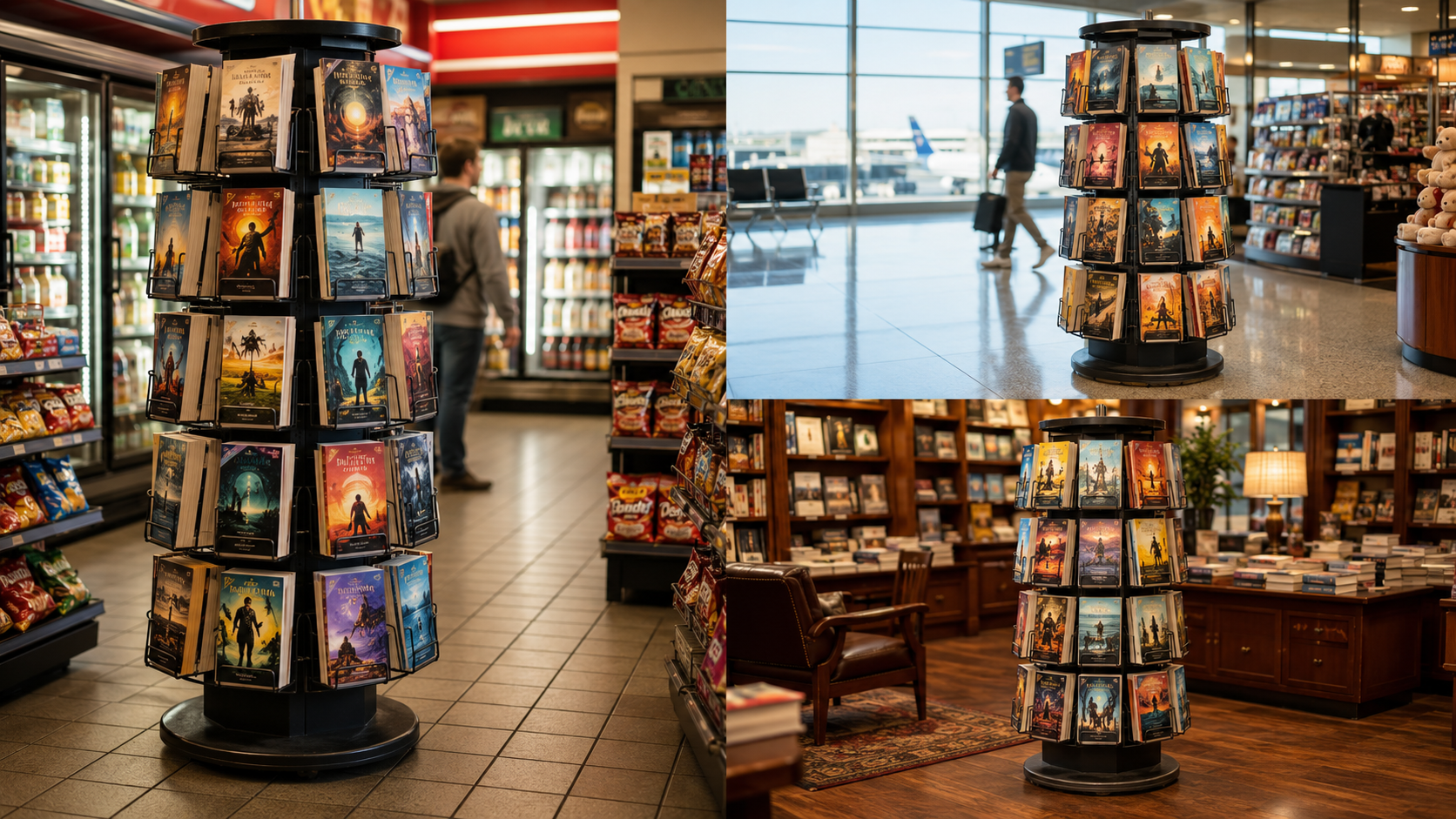
Compact, affordable, and widely distributed, these books appeared everywhere from airports and grocery stores to drugstores and supermarkets. They brought reading into everyday life and helped create generations of habitual readers.
But as publishing evolved toward premium hardcovers, trade paperbacks, and digital formats, the future of mass-market paperbacks became less certain.
Heading into 2026, the format sits at a crossroads.
One of the biggest pressures on mass-market paperbacks has been the decline of the retail channels that once supported them.
Supermarkets, newsstands, and convenience stores carry fewer books than they once did. Retail shelf space increasingly prioritizes higher-margin products.
At the same time, publishers have shifted focus toward trade paperbacks, which offer larger trim sizes, stronger aesthetics, and higher price points.
This has reduced visibility for traditional mass-market formats in many mainstream retail environments.
Despite these declines, mass-market paperbacks continue to offer something the industry cannot ignore: accessibility.
As inflation affects discretionary spending, affordable books become increasingly important. Many consumers still want low-cost entertainment options, particularly in genres like romance, thrillers, mystery, and science fiction.
Mass-market paperbacks remain especially resilient in travel retail, impulse purchasing environments, and international markets where affordability strongly influences buying behavior.
While the format has softened in some US retail environments, it remains more stable in certain international markets.
In parts of Europe, Latin America, and Asia, compact and affordable formats continue to play a major role in mass readership.
Economic conditions matter.
In regions where premium hardcover pricing is less accessible, smaller-format paperbacks remain essential to keeping books broadly available.
Bookazine’s global distribution relationships allow it to support retailers and institutions across both premium and value-driven markets.
The future of mass-market paperbacks likely is not total decline, nor dramatic resurgence.
Instead, the format may become more targeted.
Publishers will likely reserve mass-market editions for genres and channels where affordability and portability matter most. Trade paperbacks and premium editions will continue dominating bookstore merchandising, while mass-market formats serve high-volume and price-sensitive audiences.
The format’s greatest strength remains unchanged: it lowers barriers to reading.
In a fragmented entertainment landscape, that accessibility still matters.
Mass-market paperbacks may no longer dominate the way they once did, but they are unlikely to disappear.
Publishing works best when it supports multiple entry points for readers at different budgets and lifestyles.
For wholesalers like Bookazine, maintaining access to a broad range of formats ensures that retailers and readers can continue choosing how they engage with books.
The future of publishing is not about eliminating formats. It is about understanding where each format still serves readers best.