For decades, sustainability in publishing was largely voluntary. Publishers made environmental commitments, printers offered certified paper options, and progress often depended on budgets, brand values, or consumer pressure. That era is ending.
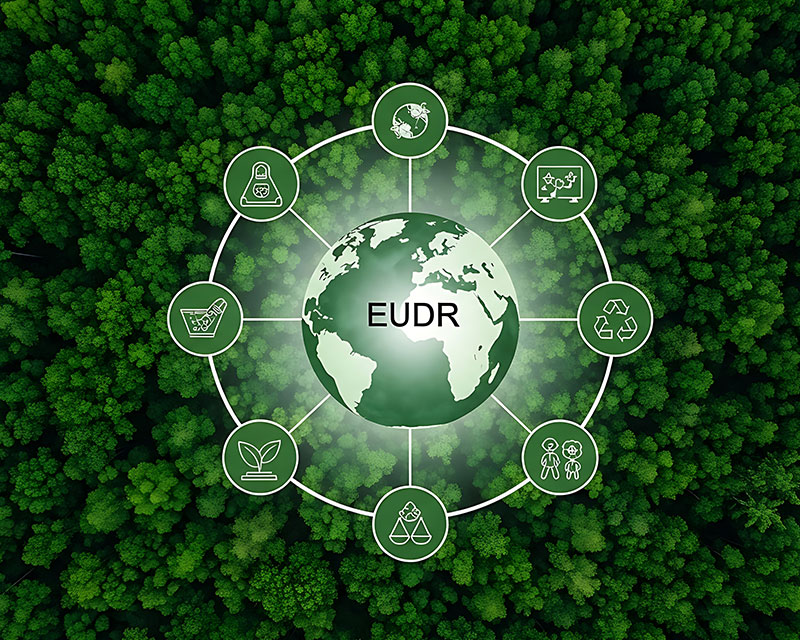
With the introduction of the EU Deforestation Regulation (EUDR), sustainability has shifted from aspiration to obligation. The regulation, which applies to products derived from wood, including paper and printed books, now requires companies selling into the European Union to prove that their products are not linked to deforestation after December 31, 2020.
For the global publishing industry, this marks a fundamental change. EUDR does not simply encourage better practices. It demands traceability, documentation, and accountability across the entire supply chain.
When Sustainability Becomes a Compliance Issue
At its core, EUDR requires publishers, importers, and distributors placing books on the EU market to verify exactly where the paper originated and confirm that it was harvested responsibly. This goes far beyond traditional certifications. Companies must now demonstrate traceability down to the plot of land where trees were harvested and maintain due diligence records to support every shipment.
For European publishers, this introduces new operational responsibilities. For U.S. and international publishers exporting into the EU, it adds an entirely new layer of complexity. Even companies with strong sustainability policies are discovering that their existing documentation is not always sufficient to meet EUDR standards.
What makes this regulation particularly impactful is its reach. It does not only affect EU-based publishers. Any company selling printed books into the EU market, regardless of where those books are produced, must comply.
This turns sustainability from a marketing advantage into a baseline requirement.
Pressure on Printing and Paper Supply Chains
The most immediate impact of EUDR is being felt in paper sourcing and printing decisions. Demand for FSC and PEFC certified paper has increased sharply, while availability has not always kept pace. Printers are reporting longer lead times and higher costs for compliant paper stocks, particularly for color printing and specialty formats.
For publishers that rely on overseas printers, especially in Asia, the challenge is even greater. Many paper supply chains are mixed, and traceability systems vary widely by region. Verifying compliance can require audits, new supplier relationships, or changes in sourcing that take time and investment.
As a result, some publishers are reevaluating where and how they print. European printing is becoming more attractive despite higher base costs, simply because compliance is easier to document. Others are investing in improved tracking systems to maintain overseas relationships while meeting regulatory demands.
These decisions are not being made lightly. Printing location affects cost, timelines, and environmental impact. EUDR is forcing publishers to balance all three in ways they have not had to before.
The Hidden Role of Distribution and Logistics
While much of the EUDR conversation focuses on publishers and printers, distribution plays a critical and often overlooked role. Compliance does not end when a book is printed. It continues through import, warehousing, and delivery.
Distributors and wholesalers must be able to demonstrate that the books they place on the EU market meet regulatory requirements. That means maintaining documentation, managing records, and ensuring that compliant and non-compliant inventory is handled correctly.
This is where experienced global wholesalers like Bookazine become increasingly important.
Bookazine operates at the intersection of publishing, logistics, and international trade. Its global sourcing relationships and distribution infrastructure allow it to work with publishers to manage compliant inventory flows, particularly for EU-bound shipments. By consolidating volumes, coordinating documentation, and aligning logistics processes, Bookazine helps reduce friction for publishers navigating EUDR for the first time.
For retailers and institutions in Europe, this matters. They need confidence that the books they acquire meet regulatory standards without creating risk or delay. Reliable distribution partners provide that assurance.
Cost, Complexity, and the Risk of Narrowing Access
EUDR is widely viewed as a necessary environmental safeguard, but it does introduce real economic pressure. Compliance requires investment in systems, audits, and supplier management. For large publishers, those costs can be absorbed. For smaller presses, they can be significant.
There is a legitimate concern that increased compliance costs could reduce the number of smaller or international publishers able to sell into the EU market. Over time, this could narrow the diversity of voices available to European readers, particularly from regions where traceability infrastructure is still developing.
This is not an argument against regulation. It is a reminder that implementation matters.
Wholesalers with global reach can help mitigate this risk by acting as compliance partners rather than barriers. Bookazine’s ability to aggregate inventory from multiple publishers and manage regulatory requirements at scale helps preserve access to a wide range of titles, including those from smaller presses that might otherwise struggle to navigate EUDR independently.
A Catalyst for Long-Term Change
Despite the challenges, EUDR is also accelerating positive change across the industry. Publishers are gaining deeper visibility into their supply chains. Printers are investing in transparency. Paper suppliers are strengthening certification and tracking systems.
Over time, these shifts may lead to a more resilient and responsible publishing ecosystem. Sustainability becomes measurable. Accountability becomes standard. Environmental impact becomes part of operational planning rather than an afterthought.
Bookazine’s role in this transition is aligned with that long-term view. By prioritizing responsible sourcing, efficient logistics, and transparent partnerships, the company helps publishers adapt without sacrificing reach or relevance.
What the Future Likely Holds
As EUDR enforcement ramps up, compliance will become less negotiable and more normalized. Publishers entering the EU market will treat sustainability documentation as standard, much like ISBNs or metadata. Printers will increasingly advertise traceability as a core capability. Distributors will be expected to manage compliance seamlessly.
For the publishing industry, this represents a shift in mindset. Environmental responsibility is no longer optional, but neither is global access. The challenge is to achieve both.
Bookazine sits squarely in that balance. Its ability to connect compliant supply chains with global retail and institutional demand helps ensure that sustainability does not come at the cost of diversity or discovery.
A New Baseline for Publishing
EUDR is changing how books are made, moved, and sold, whether publishers are ready or not. The regulation introduces friction, but it also creates clarity. It sets a new baseline for what responsible publishing looks like in a global market.
The companies that succeed will be those that treat compliance not as a burden, but as part of modern publishing infrastructure. They will partner with organizations that understand both the regulatory landscape and the cultural importance of access.
For Bookazine, this moment reinforces its value as a steady, informed presence in a changing industry. As sustainability and commerce converge, the need for thoughtful distribution has never been greater.
Books still need to travel. Ideas still need to cross borders. EUDR may change how that happens, but with the right partners in place, it does not have to change who gets to read.